Design for Government
Proposal to understanding young expatriates Finn's participations: A context-based analysis and participation taxonomy framework designed to support Finland's Strategy for Expatriate Finns
Role
Research, Analyze data, Workshop, Illustration
Sector
Public sector
Team
4 Designers
Overview
There are around two million expatriate Finns worldwide, with over 300,000 Finnish citizens living abroad. The most popular destinations are Sweden, the UK, Germany, the US, and Spain. Recent global events such as Brexit and COVID-19 have renewed interest in strengthening ties with Finland.
The Strategy for Expatriate Finns, coordinated by the Ministry of the Interior together with five other ministries, Suomi-Seura, and key stakeholders, seeks to build stronger connections and create inclusive services for Finns abroad.
Our project identified that young expatriates are underrepresented, as existing channels fail to reach them. To address this, we applied:
Context-based analysis examining life stages and touchpoints of engagement.
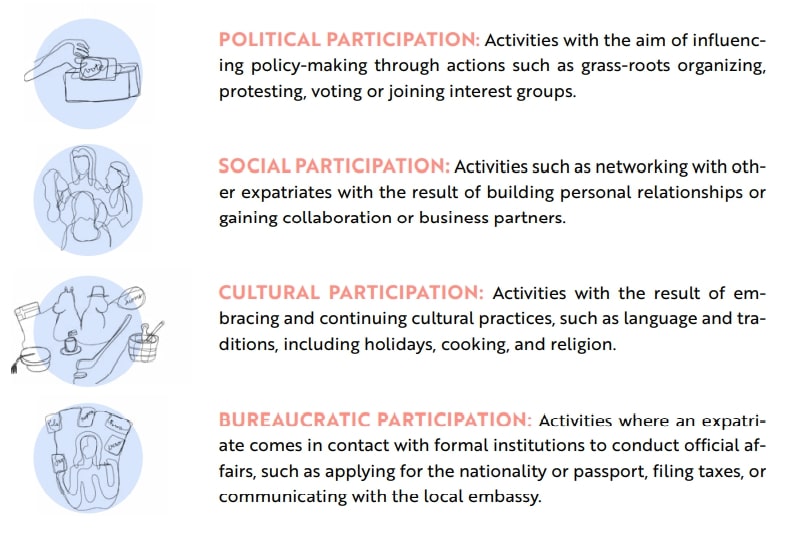
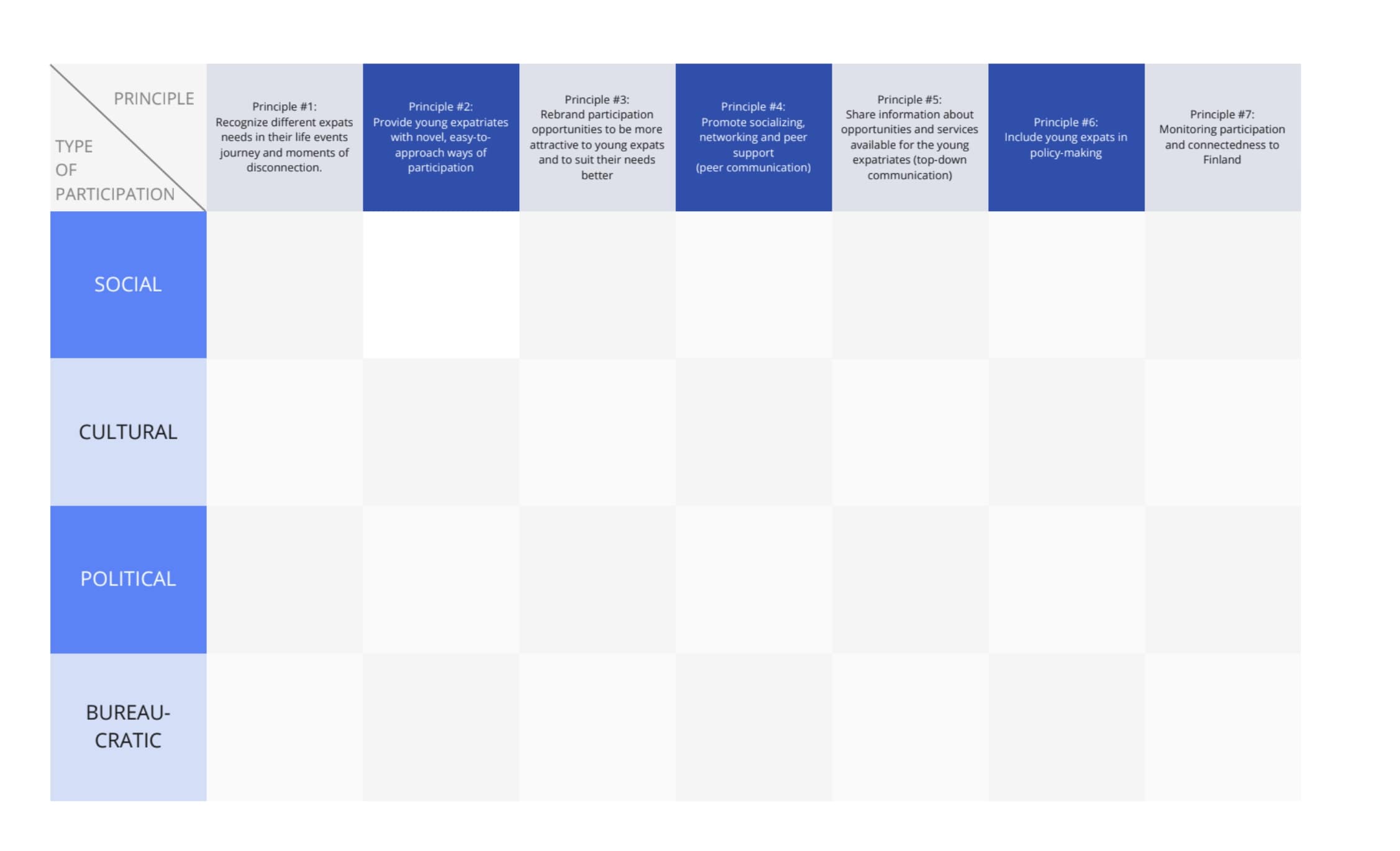
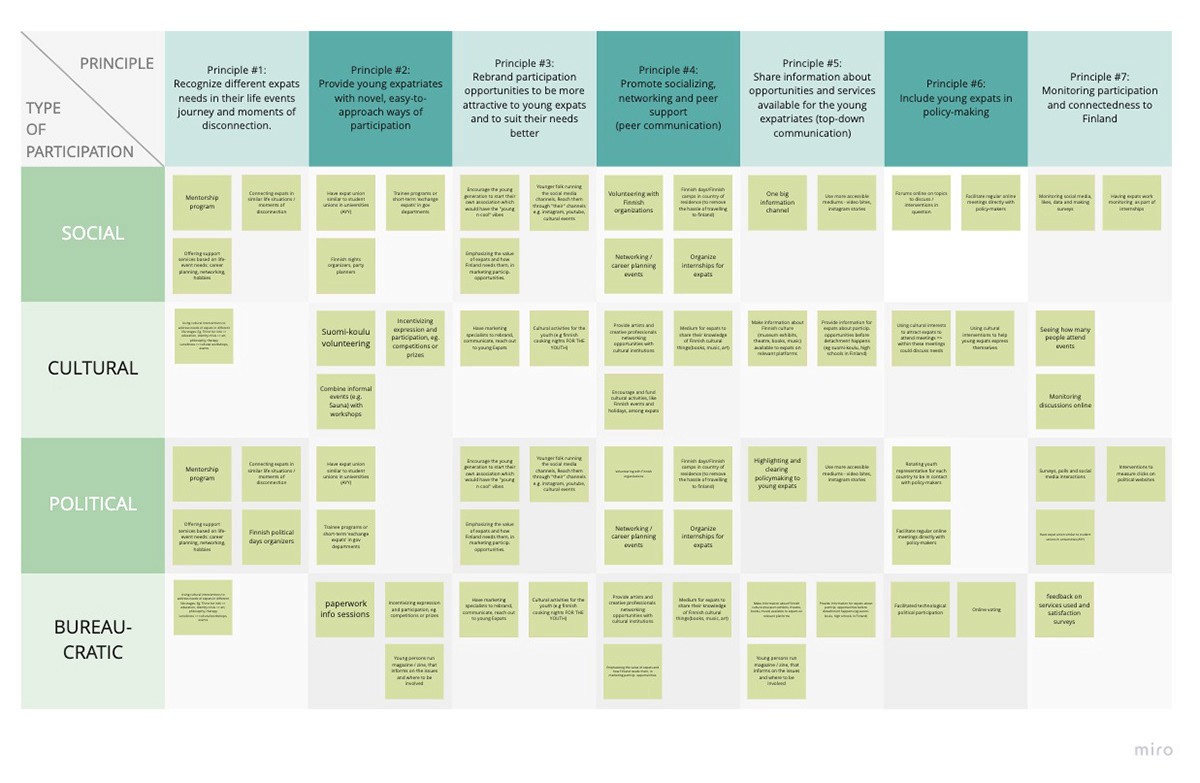
Participation taxonomy identifying four types of participation: political, social, cultural, and bureaucratic.
Developed Co-Design Tools supporting policy-makers in writing the strategy
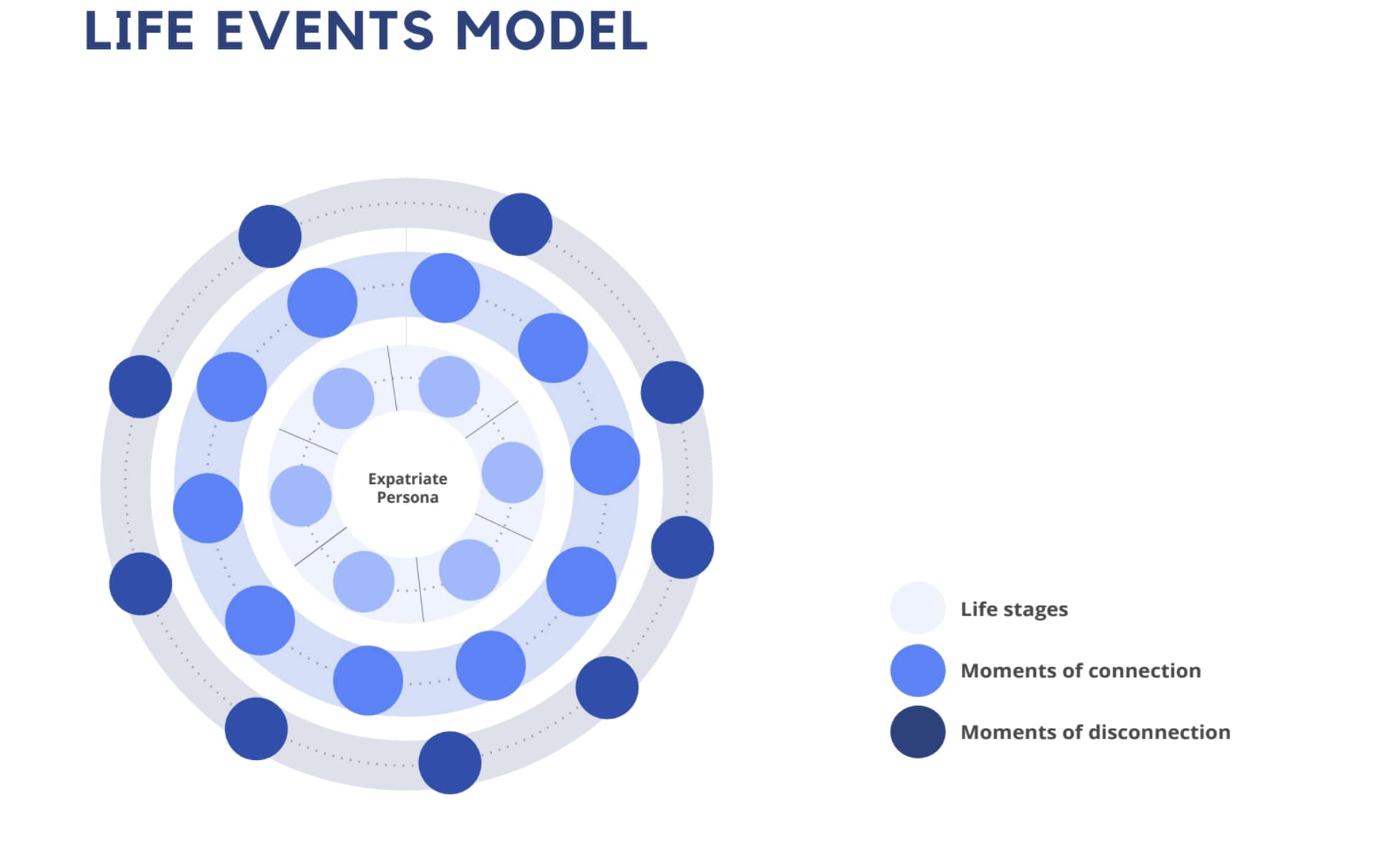
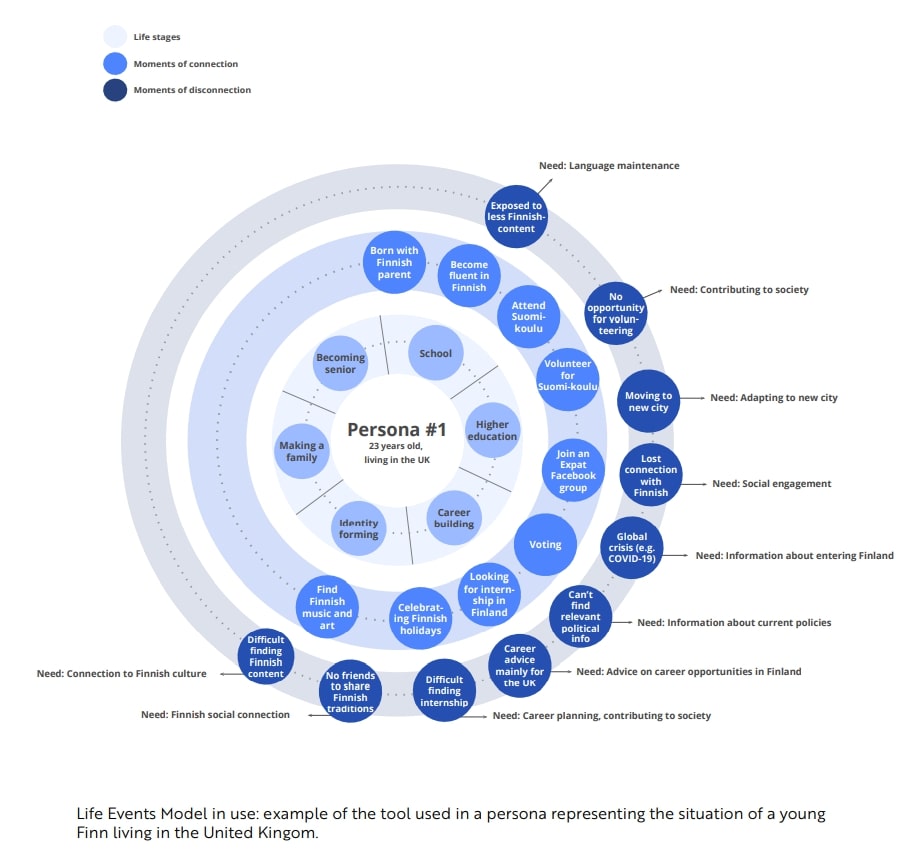
Life Stage Model visualises expatriates’ journeys, needs, and connections.
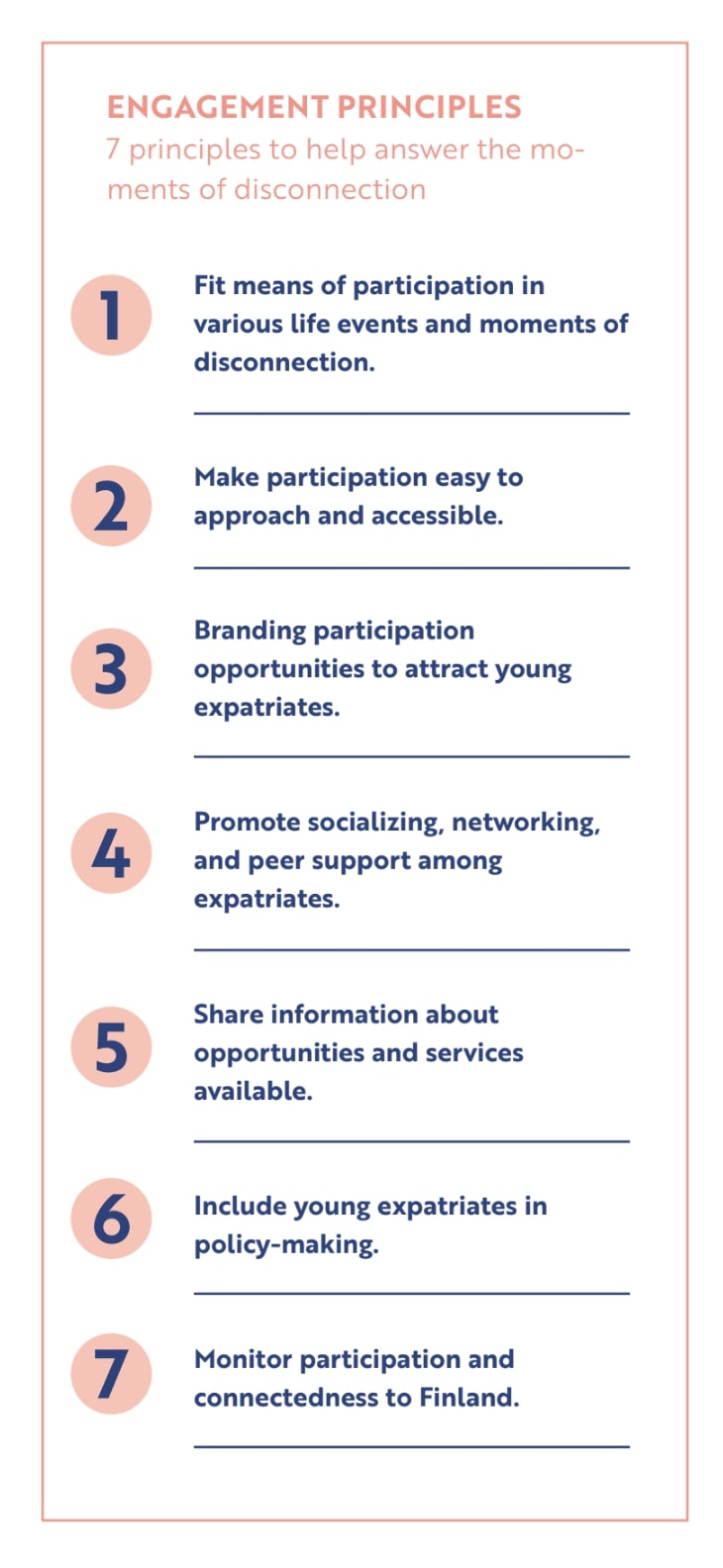
Policy Exploration Map provides principles to guide inclusive participation across categories.
The proposal and tools promote a human-centred, inclusive strategy that broadens participation beyond politics, ensures expatriates’ voices are heard, and strengthens Finland’s ties with its global community.
The problem
The Finnish government aims to attract expatriates and individuals of Finnish descent back to Finland for work and residence. Although there are many services available for expats, the challenge lies in identifying the underrepresented expat group, and understanding why their connection to Finland has weakened over time.
The solution
Our team's comprehensive research shows that the younger generation of Expatriates is underrepresented because current official channels do not align with them.
We proposed that to effectively serve the young expatriate demographic, policymakers need to better understand how they engage with Finnish society and navigate life abroad. To address this need, we developed the "Understanding Young Expatriate Finns' Participation" service design toolkit. This toolkit will help policymakers map the various life stages of young expatriates and create informed policies that cater to this demographic.
Outcomes
The service design toolkit includes:
"Life Stage Model" that maps the various stages of expatriate life.
"Policy Exploration Map" that helps policymakers explore innovative approaches to expatriate strategies.
My contributions to this project include:
Participated in all phases of the research
Co-designed the toolkits
Created illustrations for the report
Full report
Research
Survey
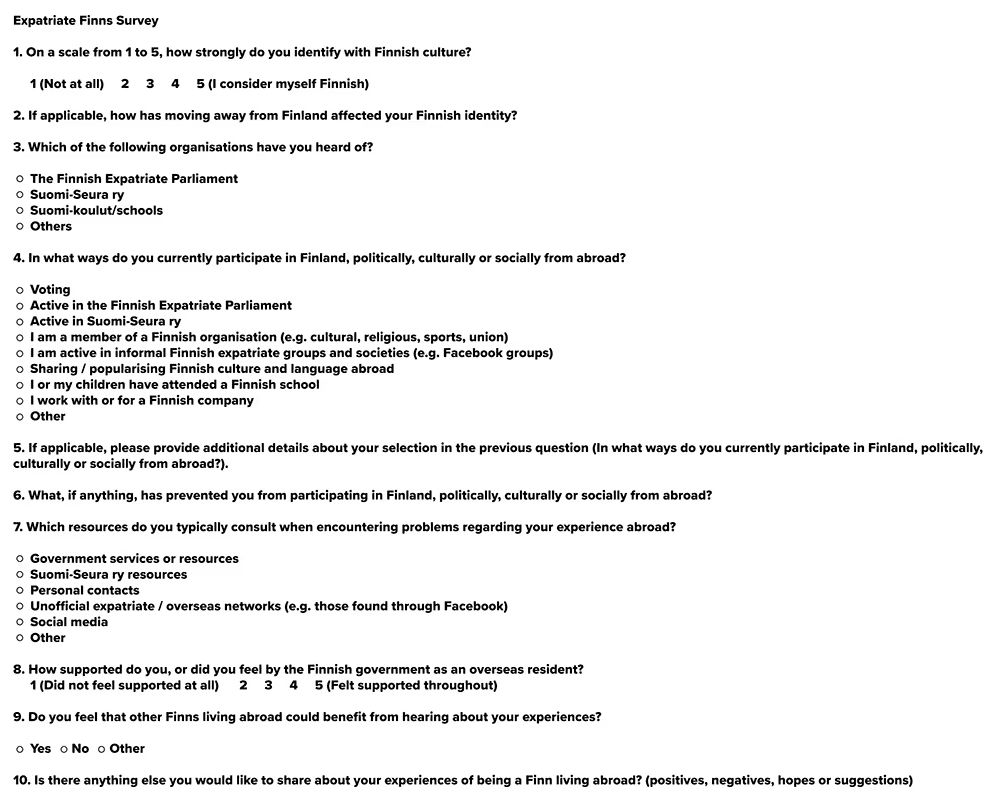
First, we create a survey studying Finnish who lived or are living abroad to understand their relationship with their home country. We posted a survey on expatriate social media groups and got 844 responses in total. The survey questions are listed below.
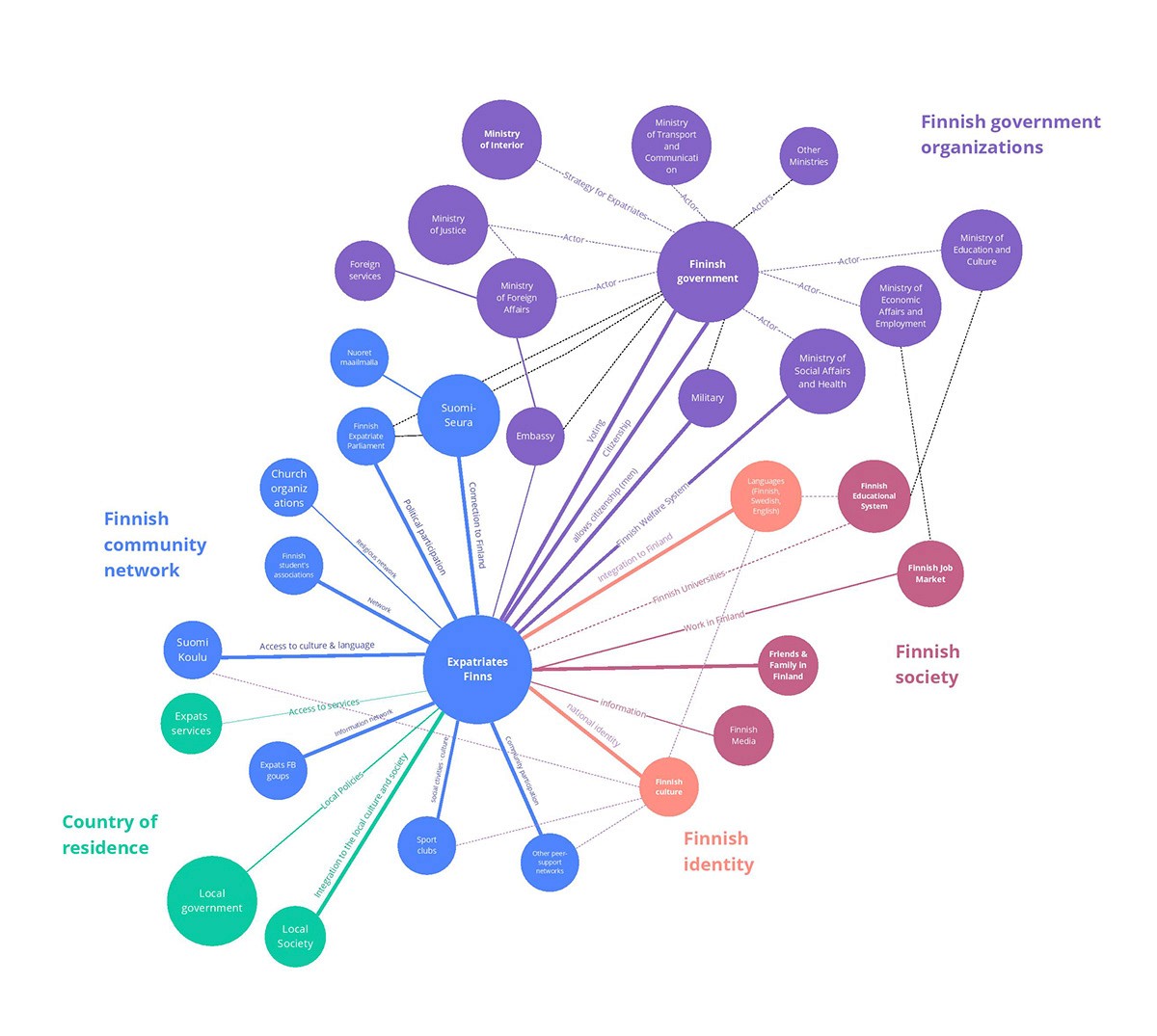
System mapping: Finnish Expatriates Network
Next, we mapped Finnish government entities, community networks, and expatriate Finns, including their countries of residence. We also explored the abstract concept of Finnish identity and its relationship to these entities.
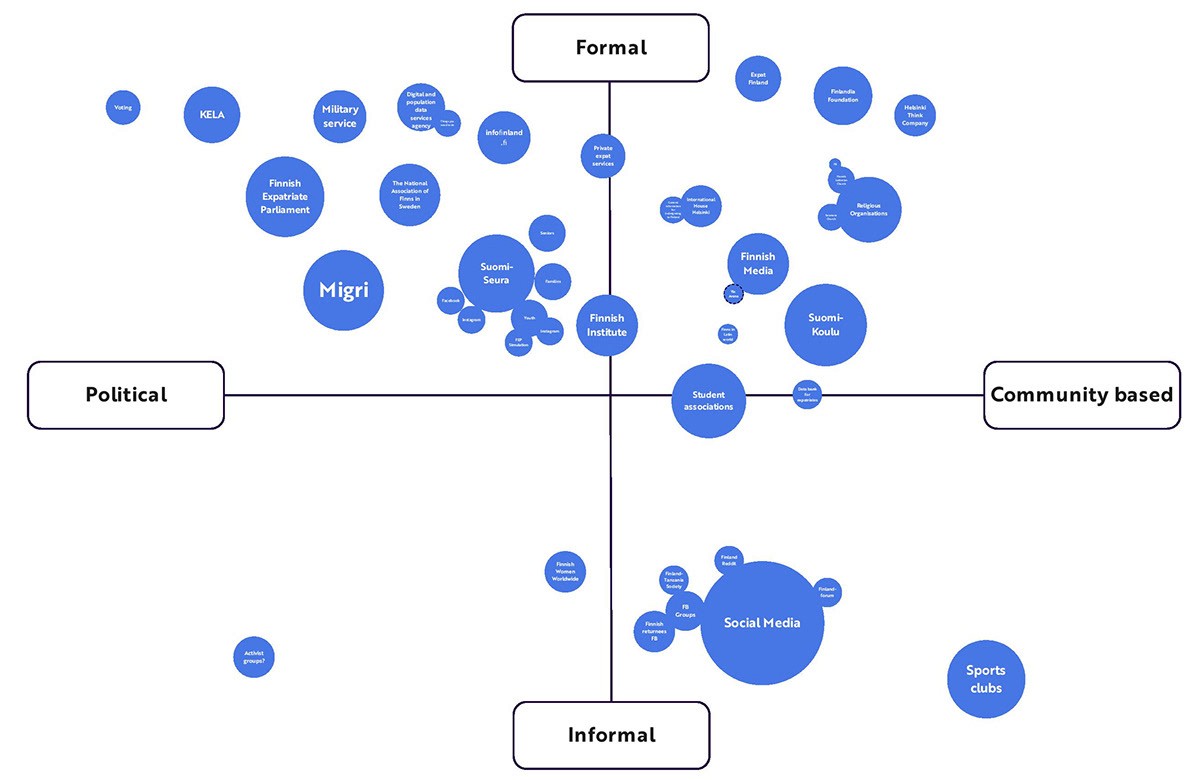
System mapping: The state of services for Expatriate Finns in 2021
As of January 2021, most expatriate services are formal, either political or community-based, and mapped on a scale from informal to formal services.
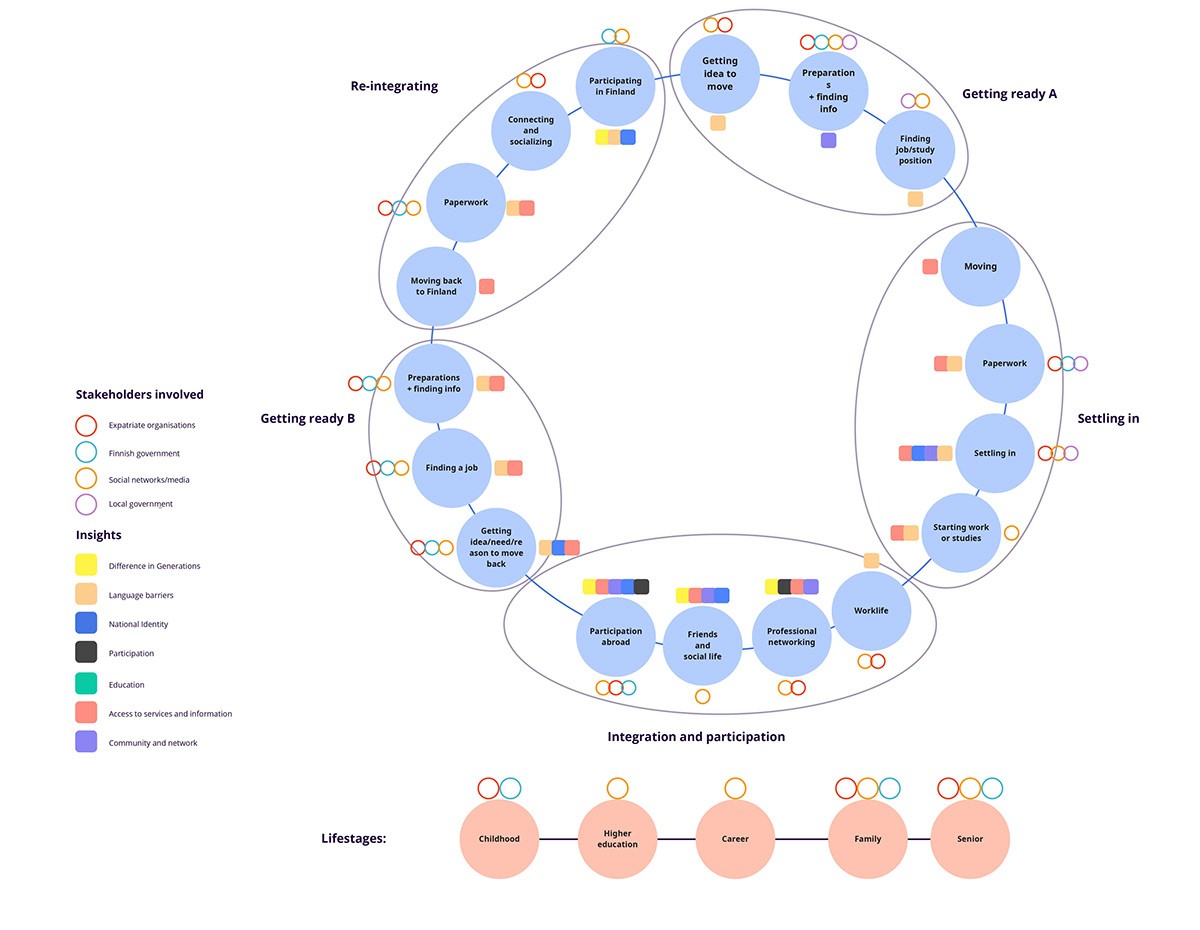
Expatriate Journey mapping based on Expat's life stages
We interviewed several Finnish expats to map out their Expatriate journey, depicting the life events and life stages they went through from expatriation to reintegration in Finland.
Affinity mapping
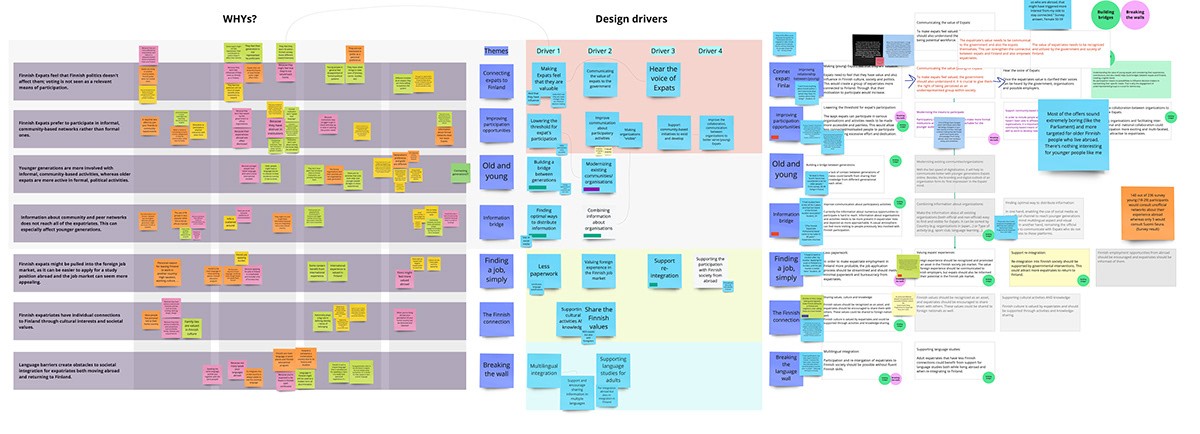
Using data collected through previous research methods, we conducted affinity mapping and identified main themes concerning Finnish expatriates:
Access to Services
Access to Information
National Identity
Language Barriers and Integration
Community and Networks
Participation
Generational differences
Education
Research Insights
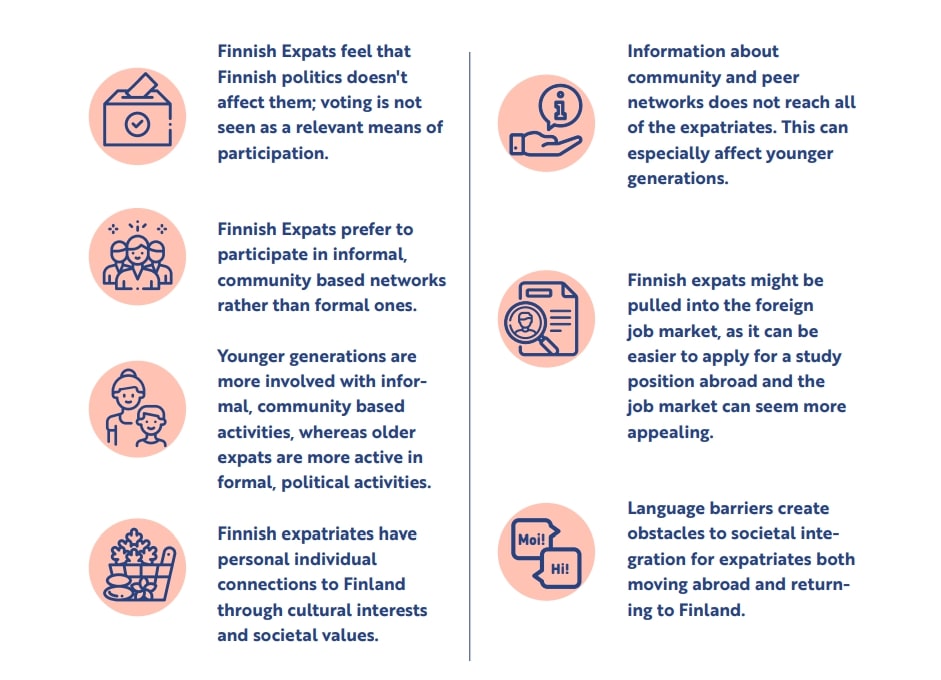
Expatriates tend to prefer informal, community-based networks over political channels or formal organizations since Finnish politics generally do not affect them while abroad. Although government services, such as mail-in voting and the Finnish Expatriate Parliament, promote formal participation, they often fail to engage certain underrepresented groups.
Our research highlights that younger generations are particularly underrepresented and favor grassroots involvement over institutional politics (Huttunen & Christensen, 2020; Dalton, 2016). Current government-backed initiatives do not resonate with them, indicating a need for further exploration of their preferences.
Additionally, while community-based expatriate networks are increasing, they remain scattered online, leading to difficulties in accessing relevant information. A lack of accessible resources limits expatriates' awareness of these unofficial communities, underscoring the importance of improving information flow.
Design drivers
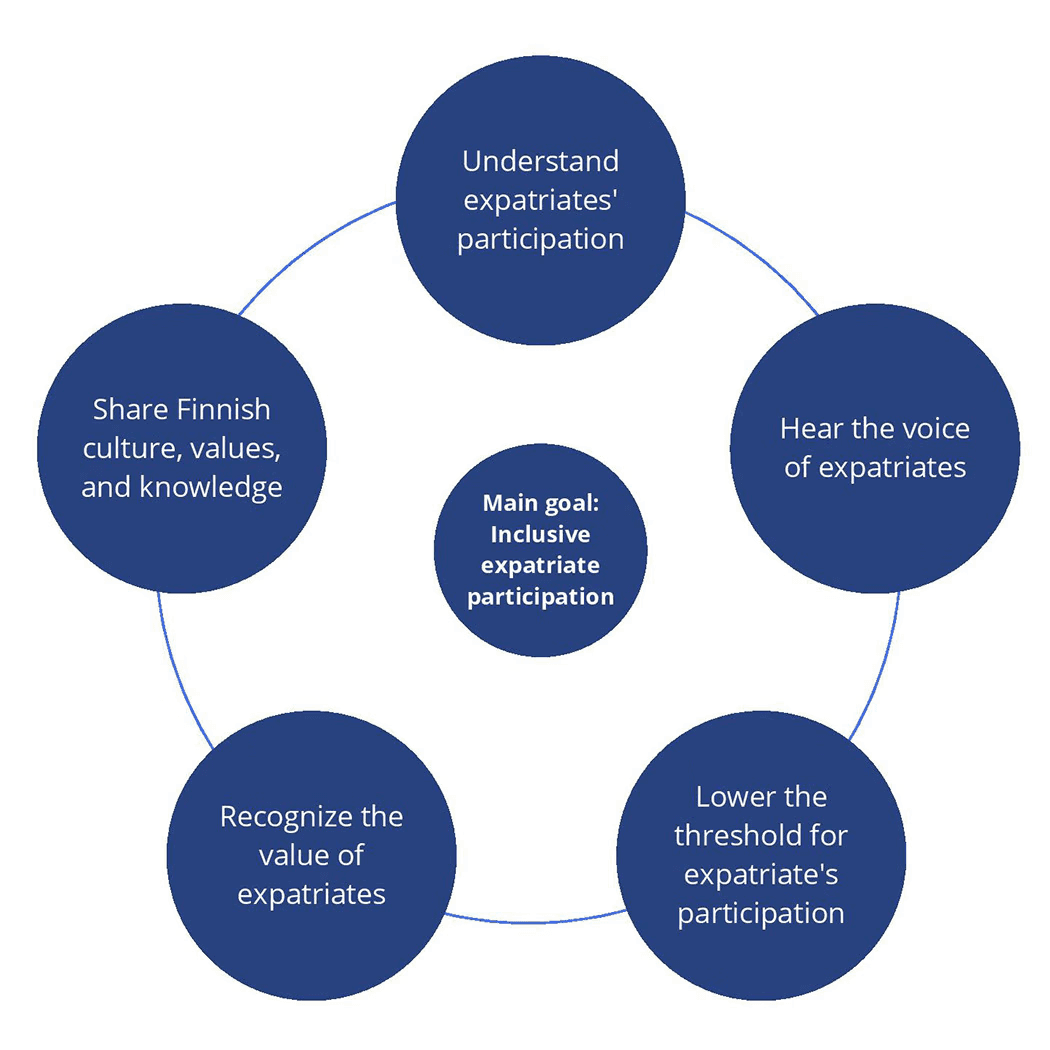
From the research findings insights and leverage points identified from the systems and expatriate journey maps, we developed design drivers - principles informed by the research. Expats graduating from Finnish Schools often lose touch with Finland and only reconnect later in life through the Finland Society. These moments could serve as leverage points.
Workshops
Workshop with our client Suomi-Seura (Finland Youth Forum)
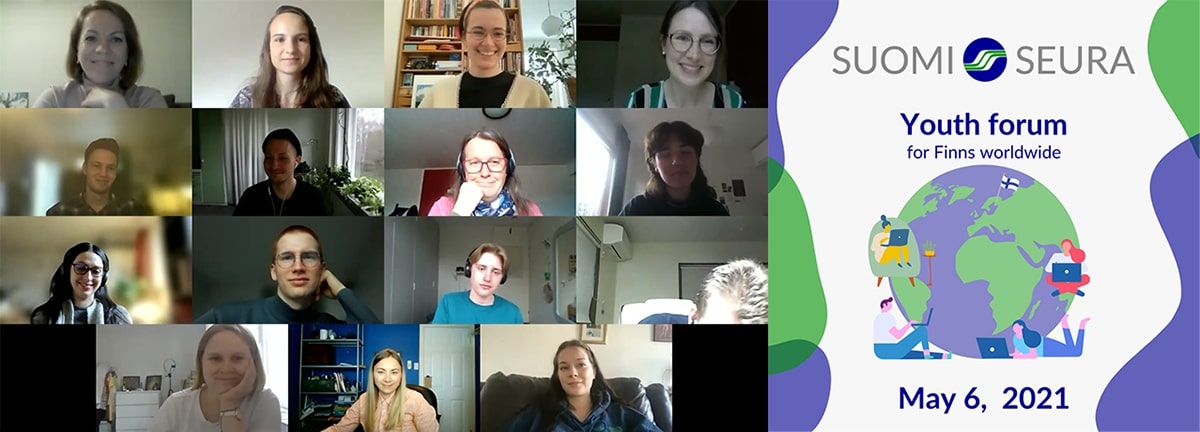
We organized a workshop for the Suomi-Seura's Youth Forum, attended by ten young Finnish expatriates from Japan and Canada. The goal was to understand how these young expats perceive participation, what makes them feel connected to Finland, and when their ties to Finland become stronger or weaker. We aimed to gain more accurate insights into the activities that foster a connection between our young Finnish expatriates and Finland.
Workshop with older generation expatriates
We attended an expat workshop held by another group and learned about the challenges expats face, such as accessing information and services.
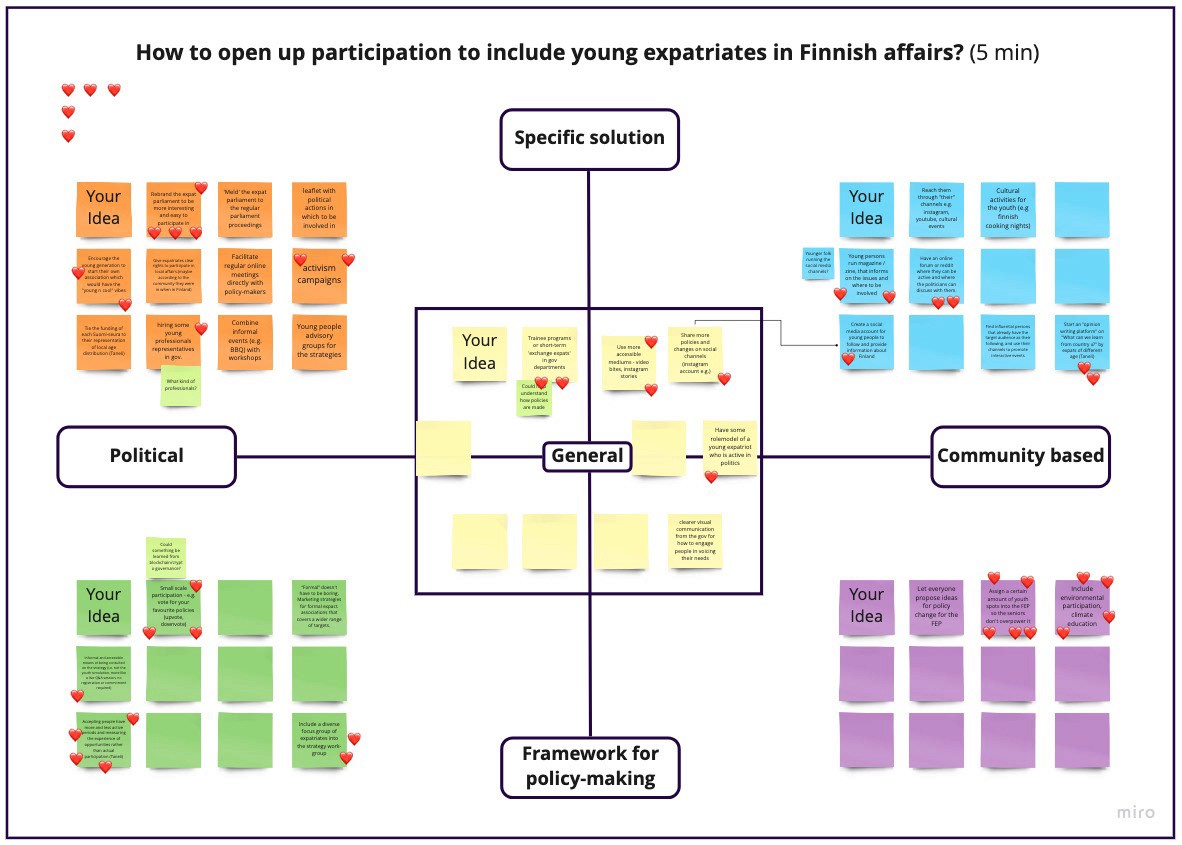
Ideation workshop
We held a collaborative ideation session with professors and students from the Design for Government course, in which we discussed potential interventions to achieve our goal of increasing young expatriates' engagement.
Define
Choosing our focus: Youth Participation
After the research and analysis phase, we were able to reframe our focus for the project. We aimed to focus on two main issues.
Expatriates' connection to Finland through life events
Expatriates experience connection and disconnection to Finland based on their personal life experiences. There seem to be life moments when they lose or gain connection. These moments are linked to specific personal life events which trigger responses concerning how connected to Finland they feel.
Young expatriates' participation gap
Although young expatriates are enthusiastic about their Finnish roots, they seem less involved than other age groups because they can’t find meaningful and approachable opportunities that match their lifestyles and preferences.
Identify 4 types of Participation
Participation is the process where people, as active citizens, contribute their own time and other resources, to take part in, express views on, and strive for decision-making power about issues that affect them. Participation must be understood as a right and a mechanism for empowerment which is crucial for democracy. This is why participation must be made possible, regardless of age, background, or location.
(This definition was adapted and extended from Farthing's (2012) definition of youth participation.)
Participation from an expatriate's perspective
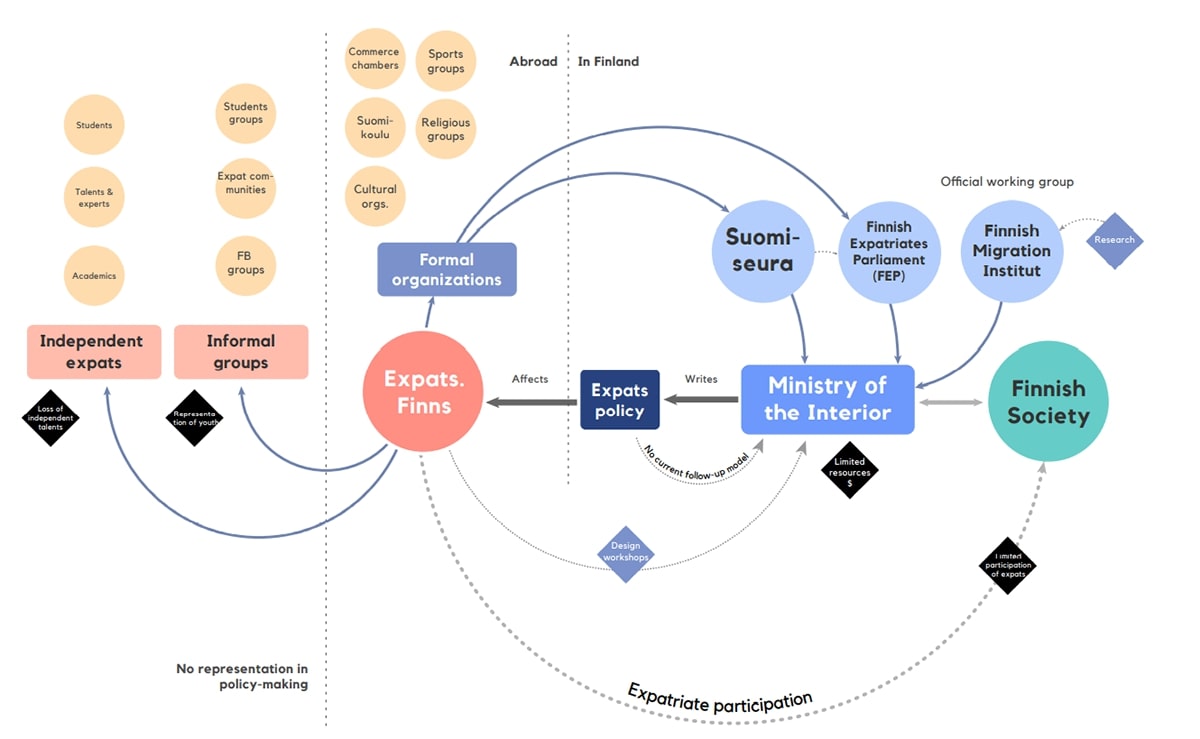
The figure below shows the context in which we approached our intervention. The Finnish Ministry of the Interior works with the Finnish Expatriates’ Parliament (FEP), Suomi-Seura who represent the voice of the expatriates, and with the Finnish Migration Institute contributing research.
Expatriates form groups and associations of different types to maintain connections:
- Formal Associations: Formal and well-established groups, like Suomi-Koulu, cultural institutions, religious organizations, commerce chambers, and sports associations. They have internal structures and are members of Suomi-Seura.
- Informal Associations: Less formal, usually don’t have a clear internal organization, and are not members of Suomi-Seura. Some examples are Facebook Expat groups and small expat communities.
- Independent Expatriates: Some expatriates remain independent due to a lack of knowledge or interest. They are professionals, entrepreneurs, academics, students, and other talents who remain partially disconnected from Finnish institutions.
Design
How might we bring the topic of expatriates' participation into government deliberation?
We have developed a data collection and analysis toolbox to help policymakers gain a comprehensive understanding of young expatriates and their participation. This toolbox consists of the "Life Events Model" and the "Policy Exploration Map."
The Life Events Model canvas is designed to assist policymakers in identifying key life events that young expatriates experience and exploring their specific needs related to these events.
The Policy Exploration Map aims to inspire and guide efforts to address the needs identified through the Life Events Model. This map is accompanied by engagement principles that focus on moments of disconnection during the expatriates' journeys.
Develop
In which way policy-makers can use the toolkits?
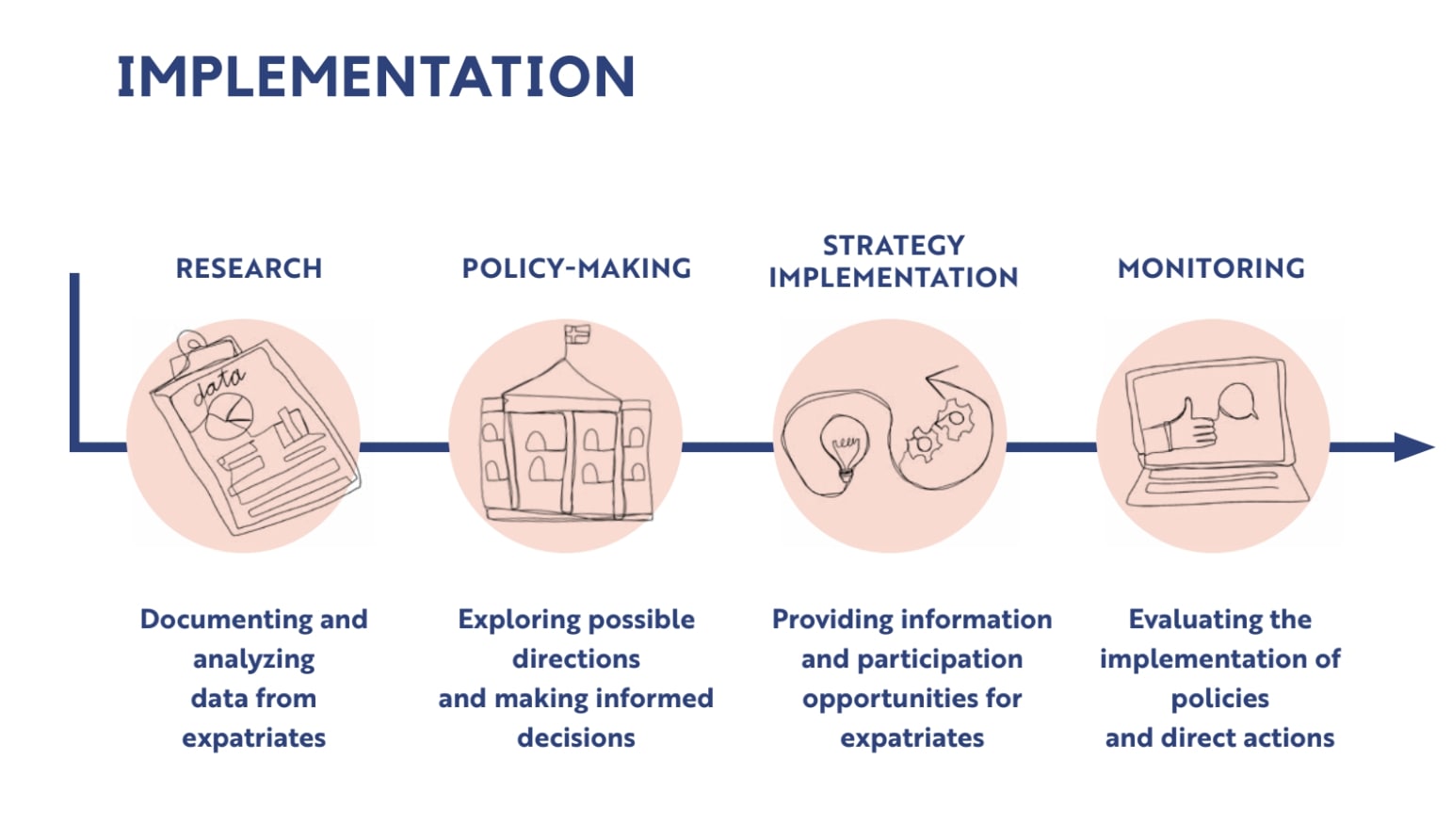
Policymakers and other entities participating in the Expatriate Strategy can utilize the suggested framework internally in their current policy-making processes. We identified four stages in the strategy-making process: Research, writing policy, plan execution, and monitoring.
Example of the Tools in action
The images below demonstrate the tool being used during the process as an example.
Conclusion
Our proposal shows that using context-based analysis and co-design tools can create real dialogue and collaboration between policymakers and expatriate Finns. Taking a long-term and human-centred approach makes policy-making more inclusive, empathetic, and effective.
The key learning is that participation is not only about gathering input but also about understanding people’s perspectives and creating value together. By involving different groups, especially youth, we can build stronger connections between expatriate Finns, global Finnish communities, and Finland itself. This can increase engagement, encourage more Finns to return, and open doors for future cultural and business opportunities.